Reward, Recognition and Retention
Retention: keeping good people
The dairy industry competes with many other sectors for skilled workers. When good employees leave, farms lose knowledge, experience and time. Recruiting and training replacements is costly, and new staff take time to reach full performance.
Because there is not always a large pool of skilled dairy workers ready to step in, it makes sense to invest in the people you already have, including family members working on the farm. A retention strategy is simply the actions you take to encourage people to stay.
What helps people stay
Most people stay in jobs where they feel challenged, valued and safe, and where work fits reasonably with life outside the farm. They are more likely to leave when they are unhappy with conditions, pay, workload, relationships or career prospects.
Think about what first attracted people to your farm. Often those same things will help keep them there.
People are more likely to stay on a farm when they:
- find the work interesting and challenging
- feel they are paid fairly and treated fairly
- respect their manager and feel supported
- feel valued by the team
- have a reasonable work life balance
- have opportunities to learn and build skills
- trust that problems will be dealt with quickly and fairly
- feel safe at work
- can see a future or career path on the farm
Retaining good people protects productivity, saves money and helps the farm run smoothly.
Simple ways to show people they matter
- celebrate team and farm milestones
- give time off for important family or community events
- acknowledge special occasions
- praise good work regularly
- create simple social or team-building activities
Small gestures go a long way. When people feel appreciated, they stay longer and contribute more.

Reward and recognition
People should be rewarded fairly for the contribution they make. Good recognition motivates, supports retention, and shows people their work matters.
Rewards are not only about pay. Many forms of appreciation can make people feel valued.
Financial rewards
Pay rises are one way to recognise performance, but they should always:
- fit within the farm’s budget
- align with business goals
- be fair compared to similar roles
Remember, people often compare total packages, not just wages. Consider:
- salary
- super
- accommodation
- paid leave
- training support
- roster arrangements
Sometimes bonuses or once-off incentives are better than permanent wage increases.
Profit sharing, performance bonuses or heifer-share arrangements can also work well when appropriate.
Automatic pay rises every year can gradually push wages beyond what the business can afford. If you want to support retention without overcommitting, consider small cost-of-living adjustments that are separate from performance reviews.
Performance-based one-off rewards are often easier to manage. Examples include:
- bonuses instead of permanent pay increases
- sharing a portion of profits
- offering a share of heifer calves in good seasons
Whatever approach you use, make sure the reward feels meaningful to the person. Take time to understand what motivates them and match rewards to their needs and goals.

People are motivated by different things.
Some want to grow, take on more responsibility, and build a career. Others value security, learning opportunities, teamwork, recognition, or simply doing meaningful work.
That means rewards don’t always need to be financial. Useful non-financial options include:
- flexible work options such as part time, job share, or adjusted hours
- training and development opportunities
- giving someone a special project to lead
- more autonomy in how they do their work
- temporary or permanent promotions and new responsibilities
- social activities that build team connection
- programs that support health and wellbeing
- mentoring or opportunities to contribute more broadly
The key is to match the reward to the person. When rewards fit individual motivations, people feel valued, perform better, and are more likely to stay.
Skills development
Building skills to build your business
Developing the skills and technical competence of people on the farm is essential for business success, regional prosperity and long-term industry sustainability. It also plays a major role in retaining good staff. People are far more likely to stay when they feel supported, capable and valued.
Training and development should be seen as an investment, because they:
- build the management and technical skills needed for the business to grow
- show employees they are valued, which lifts morale and motivation
- reduce turnover, accidents and absenteeism
- create multi skilled teams so more than one person can do key jobs
The benefits for individuals are just as strong. Ongoing development helps people:
- do their jobs better and more safely
- feel more confident and satisfied at work
- progress toward promotion or new responsibilities
- transfer skills across roles or workplaces
- adapt to change more easily
The Dairy Capability Guide is a helpful tool for planning skills development across the team and identifying training priorities.
The basic steps in putting together a training program for an individual are:
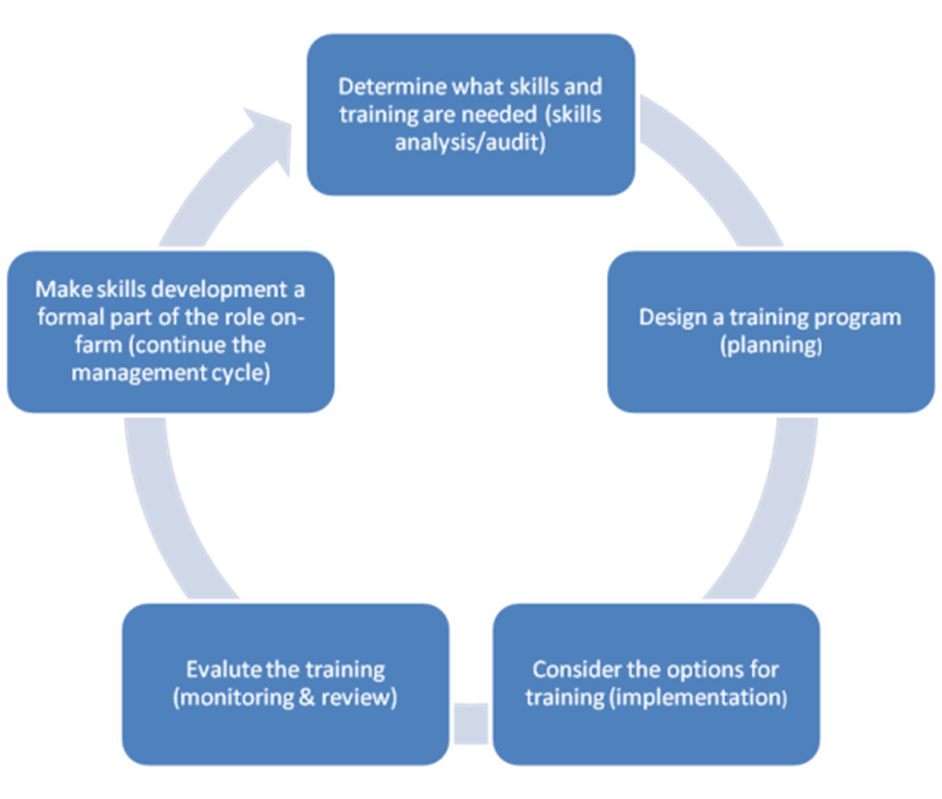
Determine what skills and training are needed
The performance appraisal process is a great way to identify future training needs. It helps pinpoint skills that will benefit the individual, align with their role, and support the farm’s needs moving forward.
Identifying and building the right skills
Good training starts with understanding what skills people have – and what they still need. The Dairy Capability Guide is a great tool to help identify those gaps and plan development in a structured way. Ask questions like:
- What does this person contribute now?
- What do we want them to achieve next — and what do they want to achieve?
- Do they have the technical skills required?
Examples: feed management, mastitis control, business skills, machinery maintenance, computer skills. - Do they hold required certificates?
Example: Chemical Users Certificate. - Would personal skills help them succeed?
Examples: leadership, communication, conflict management.
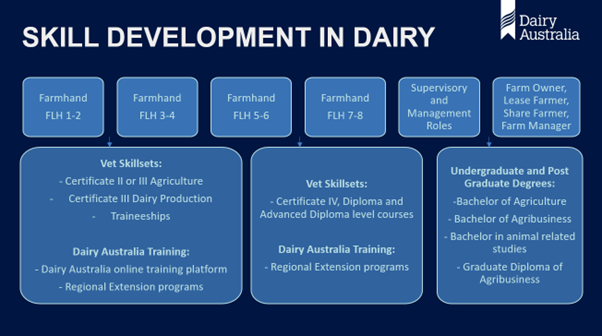
Think about both current and future skills. People may move through roles over time (Assistant Farm Hand → Supervisor → Manager), so training should support that pathway.
Training needs should not be ignored. Farms change, technology improves, and expectations rise – people need the skills to keep up. Training does not always mean expensive courses. Much of the best learning happens on farm, alongside good guidance.
Designing a simple training plan
A training plan should close the gap between current skills and required skills.
It should include:
- what needs to be learned
- why it matters
- who is involved
- timeframes and costs
Choosing the right way to train
On-farm (learning by doing) – Best for practical skills and when procedures are documented. Works well when someone experienced can teach and explain not only how, but why. Tips for good on-farm training:
- be clear about the skill being learned
- explain reasons, not just instructions
- use real “what if” scenarios
- give regular feedback
- provide time to practice
Coaching – Coaching helps people build habits and confidence. It encourages them to use skills they already have, try new approaches, and meet farm standards.
Extension programs – Field days and discussion groups keep people up to date with new ideas and technology and help them stay connected socially.
Formal training (TAFE/RTOs) – Useful when recognised qualifications or deeper technical knowledge are needed. Highly motivating and widely recognised by other workplaces.
Planning training at the right level – Simple skills may need just one short session. More complex knowledge might need training in stages, with time to practice in between.
Check if the training worked
After training, ask: Did it help? Was it clear and relevant? Did the person actually learn new skills? Can they use those skills confidently on farm? Did results improve?
- better quality
- fewer mistakes
- improved productivity
Make skills development part of the job
Training shouldn’t be “optional.” Build it into performance appraisals, set time frames, resource it, and connect it to career goals. When learning becomes normal farm practice, people grow and so does the business.
Exit interviews
People leave jobs for many reasons. Understanding why they leave helps improve retention. Exit interviews give departing employees a chance to speak honestly about their experience. They can highlight what is working well and where the farm can improve.
Providing references: When someone leaves, they may ask for:
- a simple statement of employment (role and dates), or
- a written or verbal reference describing their skills, performance and attitude.
If you agree to be a referee, a future employer may contact you to confirm details.
Be fair and accurate. A reference should be honest, balanced and not misleading. It helps both the former employee and the new employer make good decisions.
Follow us


© Dairy Australia Limited 2026.